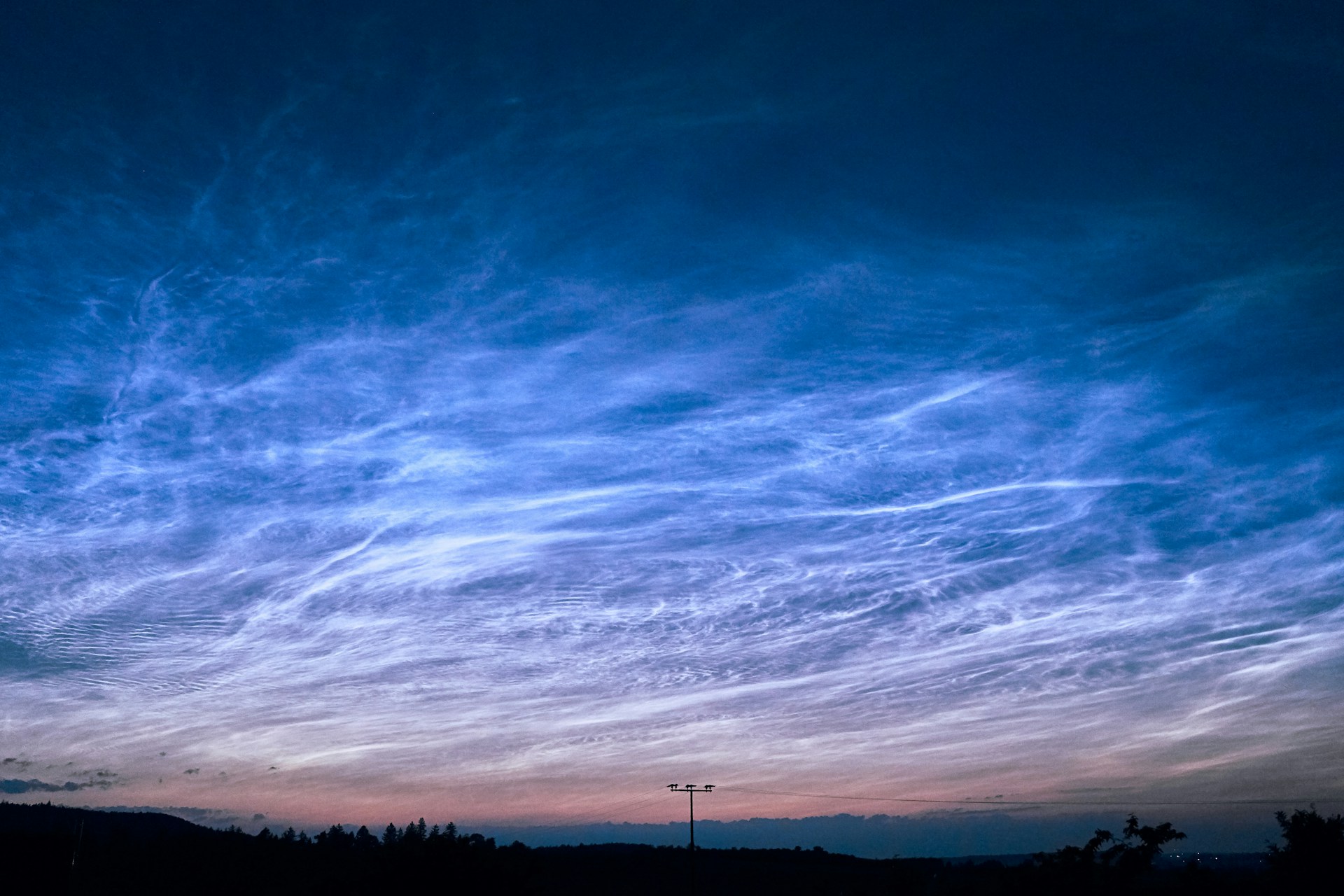
Have you ever looked up and gasped at a bizarre or massive cloud formation? Some clouds defy expectations and make people wonder what they’re actually looking at.
These are 10 of the most rare cloud formations that you may get lucky enough to see. And now you’ll be able to impress your friends by telling them exactly what it’s called!
1. Lenticular Clouds
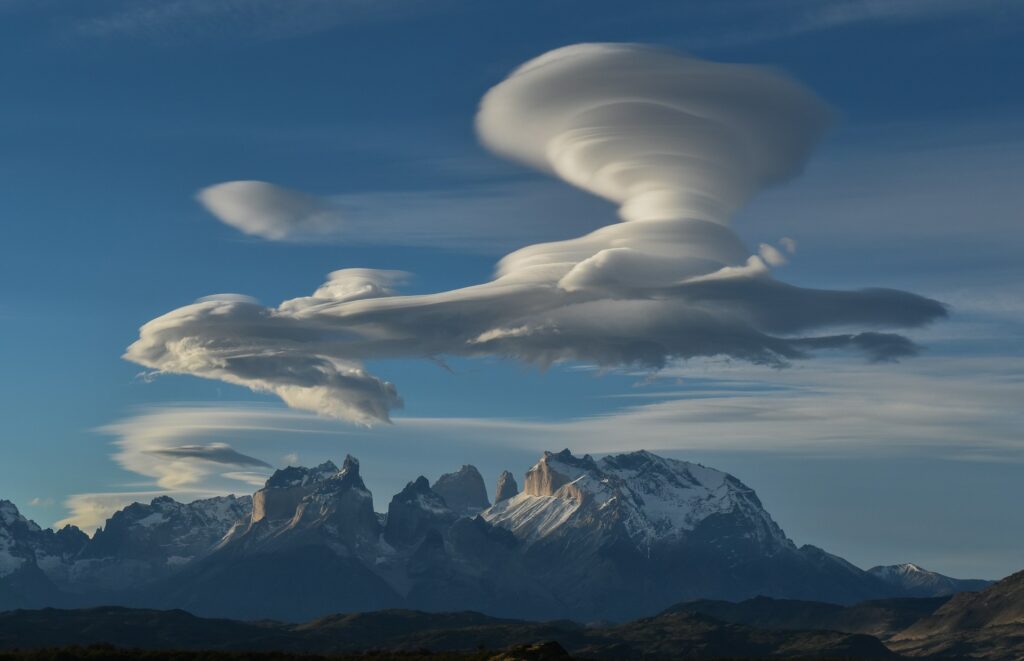
Lenticular clouds are stationary, lens-shaped formations that typically develop over mountain ranges or other geographic features. Their smooth, saucer-like appearance often leads to mistaken UFO sightings. These clouds form when moist air flows over mountains, creating standing waves that condense into this unique shape.
2. Asperitas Clouds
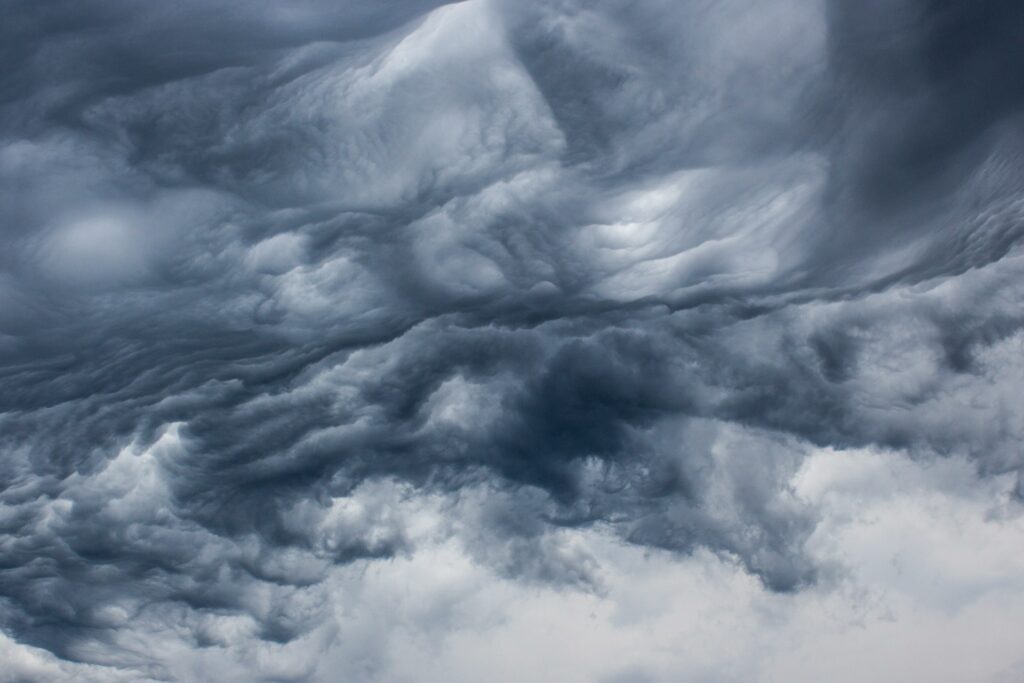
Asperitas clouds display chaotic, wave-like structures that give the sky a turbulent, otherworldly appearance. Recognized as a distinct cloud type in 2017, their dramatic formations can resemble scenes from science fiction, evoking images of alien landscapes.
3. Mammatus Clouds
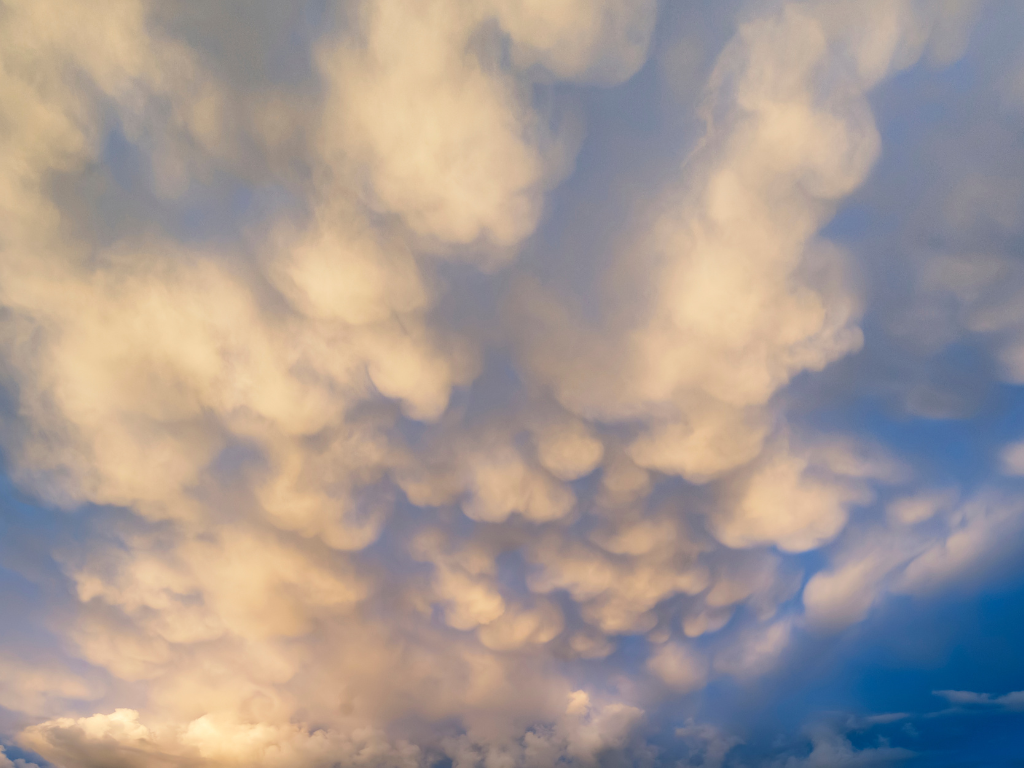
Mammatus clouds are characterized by pouch-like sacs that hang beneath the base of cumulonimbus clouds. Their bulbous, rounded formations can create an eerie, alien atmosphere, especially when illuminated by the setting sun.
4. Fallstreak Holes (Cavum)
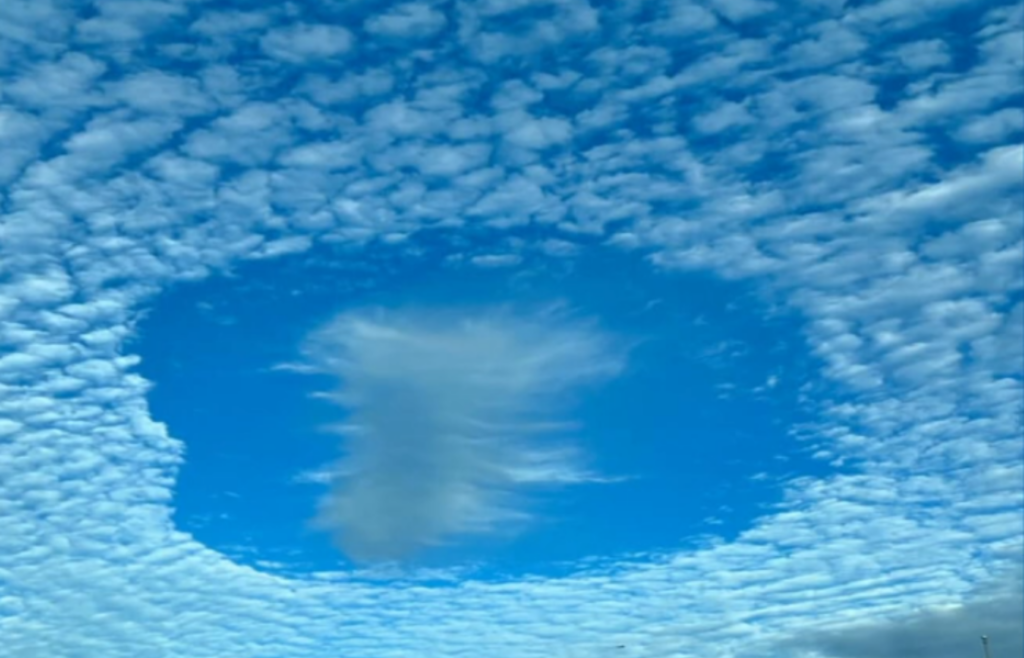
Also known as hole-punch clouds, fallstreak holes occur when supercooled water droplets in a cloud suddenly freeze or evaporate, leaving a large, circular gap. The resulting formation can appear as though a UFO has punched through the cloud layer.
5. Kelvin-Helmholtz Clouds
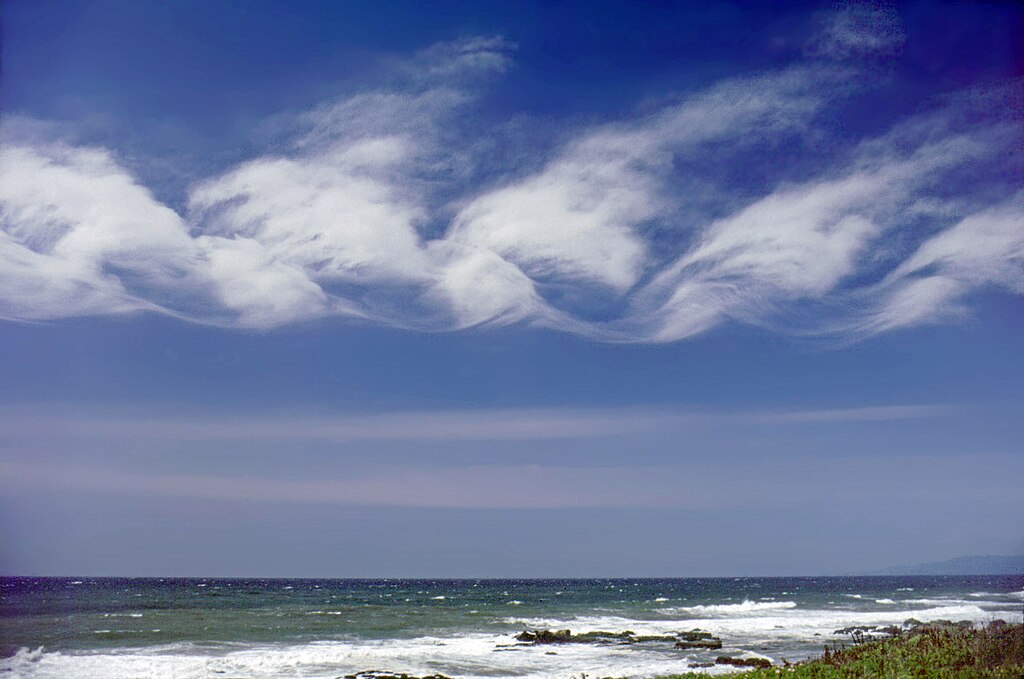
These clouds resemble ocean waves breaking in the sky. They form due to shear between two layers of air moving at different speeds, creating a rolling motion that looks strikingly similar to depictions of flying saucers in motion.
6. Roll Clouds
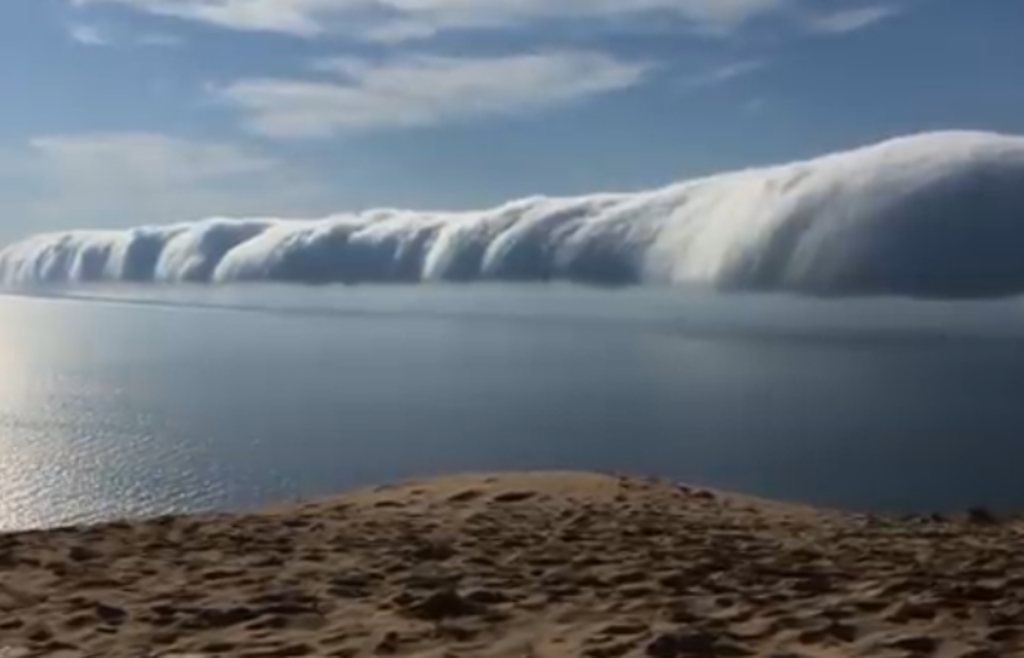
Roll clouds are a type of arcus cloud that appears as a horizontal tube, seemingly rolling about its horizontal axis. Often forming along the leading edge of a thunderstorm, their cylindrical shape can evoke images of massive, elongated spacecraft.
7. Noctilucent Clouds
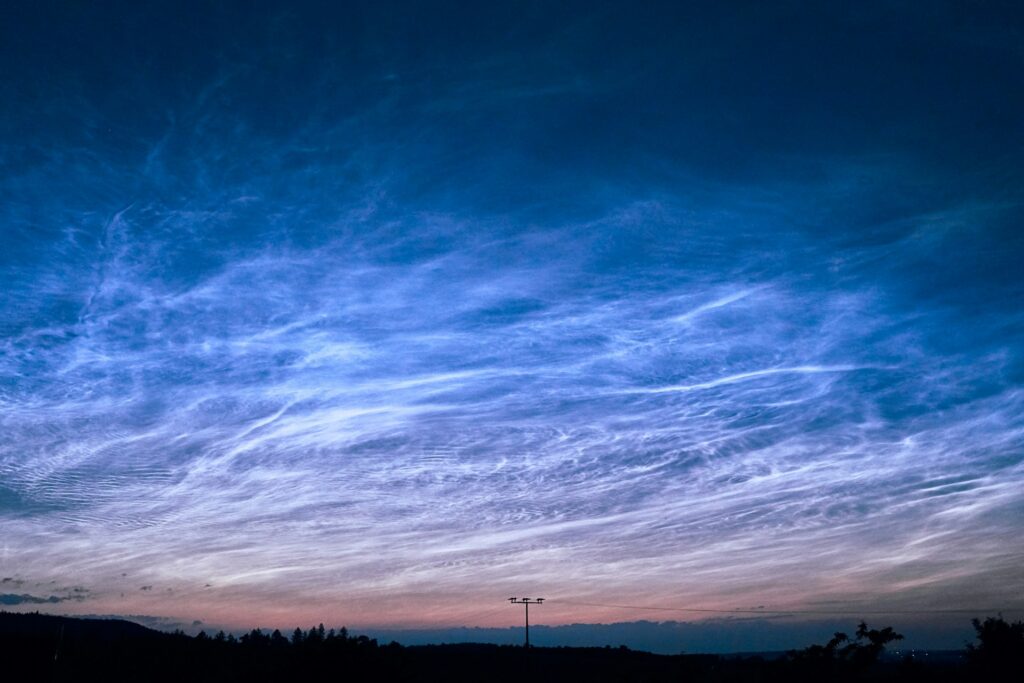
Occurring at the edge of space, noctilucent clouds are composed of tiny ice crystals and are illuminated by the sun when it is below the horizon. Their ethereal glow and high-altitude formation give them an unearthly, mysterious quality.
8. Nacreous Clouds
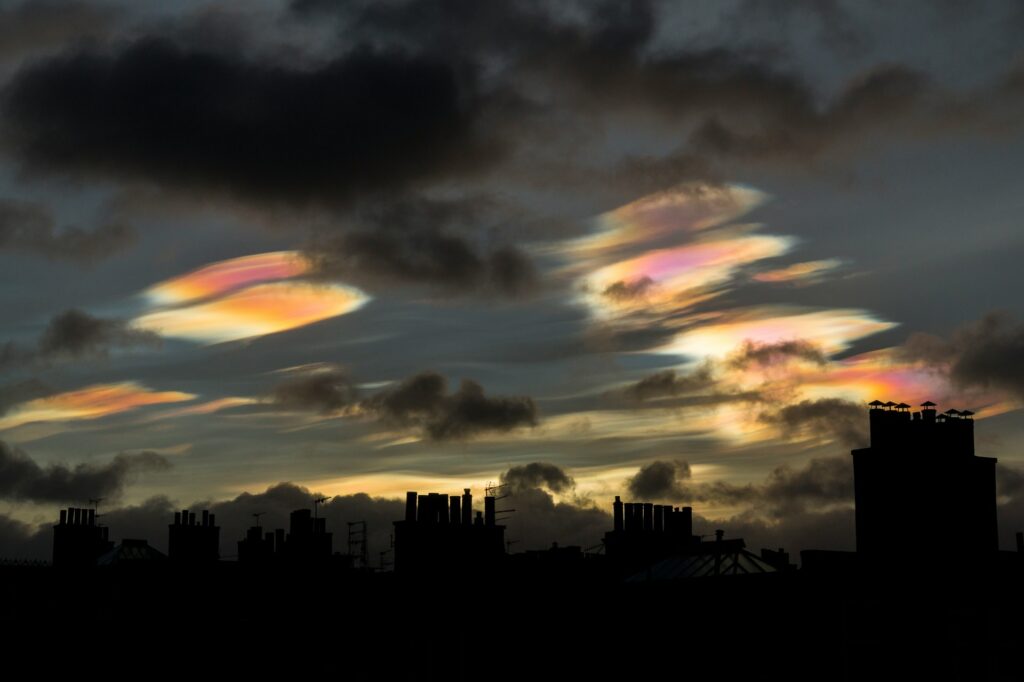
Also known as polar stratospheric clouds, nacreous clouds form in the stratosphere at very low temperatures. Their pearlescent appearance and vivid colors make them look like something out of a science fiction movie.
Read More: 10 Coldest Places on Earth That Are Actually Inhabited
9. Morning Glory Clouds

Morning Glory clouds are rare, elongated roll clouds that can extend for over 1,000 kilometers. They are most commonly observed in northern Australia and have a striking resemblance to massive, airborne cylinders.
Read More: Top 15 Wild Effects Volcanic Eruptions Have on the Planet
10. Pileus Clouds
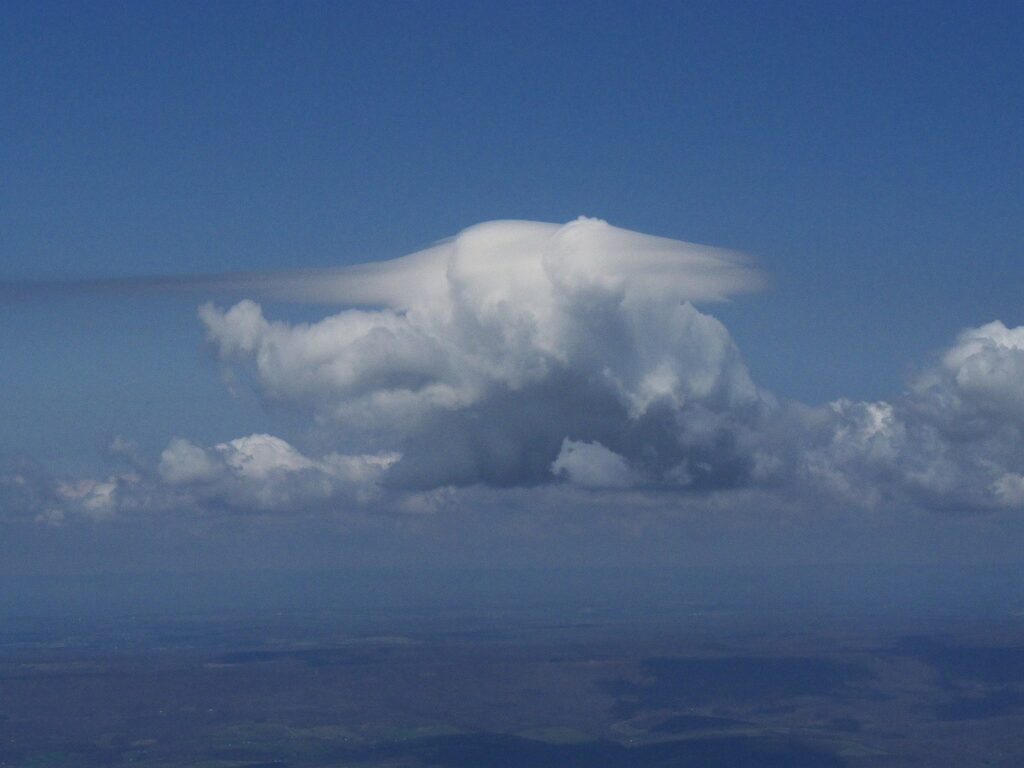
Pileus clouds, or cap clouds, form atop rapidly growing cumulus clouds, creating the appearance of a hat or dome over the main cloud. Their sudden formation and smooth, rounded shape can give the impression of a hovering object.
These remarkable cloud formations not only showcase the atmosphere’s dynamic nature but also remind us of the endless wonders that can be found by simply looking up.
Read More: Top 10 Ways Volcanoes Affect Global Weather